EliteIntegrity

/John Horton

About John Horton

Writer at GameCodeSchool.com
  • Nearest neighbour collision detection

Collision detection: Neighbour checking

By |

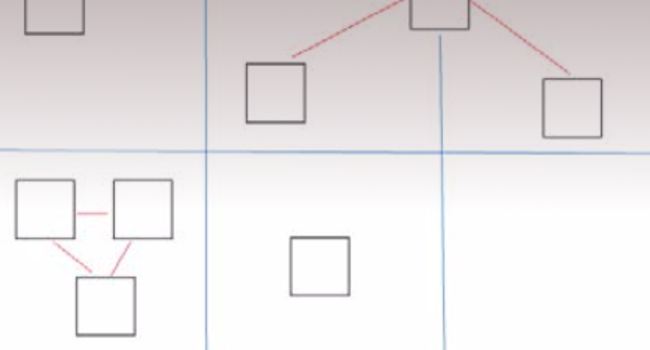
This method allows us to only check objects that are in the approximate same area as each other. It can be achieved by checking which neighbourhood of our game a given two objects are in, and then only performing the more CPU intensive collision detection if there is a realistic chance that a collision could […]

  • Radius overlap collision detection

Collision detection: Radius overlap method

By |

This method is also checking to see if two shapes intersect with each other, but as the title suggests, it does so using circles. There are advantages and disadvantages compared to other methods.

The radius overlap method works well with shapes more circular in nature and less well with elongated shapes as shown in the image […]

  • Rectangle intersection collision detection

Collision detection: Rectangle intersect method

By |

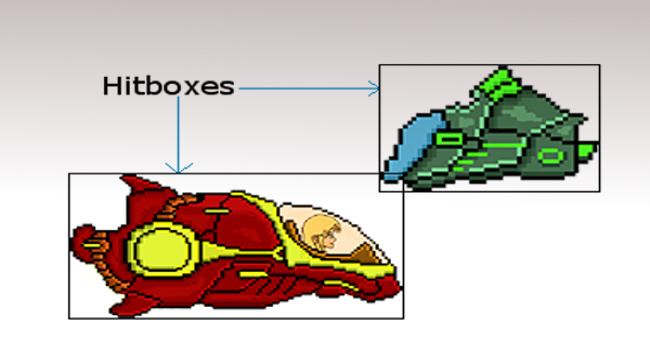
Rectangle intersection detection collision detection is really straightforward. We draw an imaginary rectangle; we can call it a hitbox or bounding rectangle, around the objects we want to test for collision. Then, test to see if they intersect on each and every frame of the game. If they do, we have a collision.

Where the hitboxes […]

  • simple_pong_game_made_with_sfml

Coding a simple Pong game with SFML

By |

In this first playable game project we will build a very simple Pong clone. If you don’t know what Pong is then you are much younger than me and you should take a look at its appearance and history before continuing. We will use everything we learnt about C++ Functions and OOP to create a […]

  • sfml_moving_bouncing_shapes_demo

Conditions and branching demo: Bouncing shapes

By |

In this mini-project we will get to use C++ condition checking with some statements. Like the last project we will draw some shapes (slightly different this time) and move them. This time however instead of letting them disappear off of the screen we will detect when they are leaving the screen on any of […]

  • sfml_variables_demo

Game variables demo: moving circles

By |

In this mini-project we will get to experiment with how we can use C++ variables in our games. We will play around with some  variables and see how they can be used with the SFML class to put circles on the screen. We will then see how we can use what we learnt in […]

  • c_plus_plus_sfml_tutorials_and_projects

What is SFML and should I use it

By |

First of all SFML is great and this is not a review about whether or not SFML is extremely cool or not. Trust me, it is extremely cool. This article will just explore what it can do, when it is best used and by whom. Also we will see who it is not for and […]

C++ Game Coding Level 1

By |

This course is for you if you are completely new to programming or the C++ language. This tutorial course will explain all you need to know to code C++ games as quickly as is realistic. This course will also be relevant if you wanted an introduction to C++ that was a bit more fun and a lot more visual […]

Game variables in C++

By |

Whenever we code a PC game, we need to ‘know’ what the situation in the game is at any given point in time. As an example, things like the player’s score, how many people connected to the game lobbies, what position the game level all the players and NPCs are and of course what they are doing. The game’s variables are the […]

Manipulating the value of our game’s variables

By |

Having just learned what C++ game variables are and that they store values that represent the objects in our games it is probably obvious that these values held by our variables will need to change as the game progresses. We can achieve this with C++ operators. Operators in C++ are just like mathematical operators and many of […]

css.php